|
Costochondritis
|
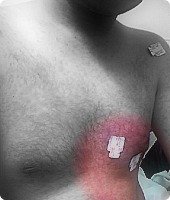
Costochondritis is more common in those between 20 and 50 years of age, though it tends to peak in the 40's. It is also more common following an infection of the upper respiratory tract, usually caused by viruses. If you suffer with fibromyalgia, you are also more likely to have this condition.
The symptoms of costochondritis include:
- History of cough, cold, runny nose plus or minus fever in the preceding days, week or two
- Chest or upper abdominal pain, worse on coughing, sneezing or taking in deep breathes
- Sharp or dull nagging continuous pain that could spread to the side and to the back
- Pain can be reproduced by pressing on the rib or over the margins of the ribs in the affected area.
The most affected ribs are usually the 2nd to the 7th ribs here, in any other or combination.
Only some of the above symptoms may be present. The likelihood of this diagnosis is more important if any of the associated causes discussed below is present.
Causes of Costochondritis
The exact cause of costochondiritis is unknown. What we do know is that if often follows:
- An episode of viral infection of the upper respiratory tract (cold virus)
- Following any major surgery / operation
- Presence of fibromyalgia
- Sports or vigorous exercise injuries
- Intravenous drug use
- Chronic cough
- Heavy lifting
It could also occur "out of the blue" without any warning or predisposing factor.
Diagnosis of Costochondritis
The diagnosis of costochondritis is often made on clinical grounds. This means that you do not actually need any specific test to make of diagnosis of this condition.
After a thorough history to see if a cause or predisposing factor can be identified, a physical examination is necessary.
The most important findings on physical examination will be reproduction of pain on the chest wall or upper abdomen by apply pressure on the ribs.
It is important that other causes of chest or upper abdominal pain be excluded as the cause of the pain by carrying out some tests. Commonly requested tests that may be requested in the diagnostic work up for costochondritis will include:
- Blood tests. This will include Full Blood Count (Complete Blood Count - CBC). It may show raised levels of white blood cells, as a crude marker of inflammation or infection.
A blood test for Cardiac enzymes (like troponin) may also be done to exclude a heart attack.
- Chest X-ray. This is to exclude the possibility opf a broken rib. It also help to exclude the possibility of a pneumonia as the cause of the chest or upper abdominal pain.
Other things to look out for in a chest radiogram is the possibility of a pneumothorax - air in the chest wall, outside the lungs.
- ECG (EKG). This is to exclude a heart attack
Other test that may be done in specialized center include MRI, gallium radionuclide, and ultrasound scanning.
Treatment of Costochondritis
Costochondritis resolves on its own most times without treatment. On the average, it takes 4 to 6 weeks for symptoms to resolve, but could last for several months especially in post surgical cases.
In severe cases however, the use of simple pain killers like paracetamol (acetaminophen) on it own or in conjunction with medications like ibuprofen or diclofenac (NSAIDS), helps. Steroids like prednisolone and other rheumatological medications like sulfasalazine has been found to shorten the duration of symptoms. Such medications are best prescribed by expert rheumatologist.
In the presence of fibromyalgia, adequate sleep, brisk exercise, as well as the use of antidepressants like amitriptylline or duloxetine for prolonged costochondritis pain has been found to be very helpful to some.
References:
- Cubos J, Cubos A, Di Stefano F. Chronic costochondritis in an adolescent competitive swimmer: a case report. Journal of Canadian Chiropractic Association. 2010 Dec;54(4):271-5.
- ANNE M. PROULX, DO, and TERESA W. ZRYD, MD, MSPH. Costochondritis: diagnosis and treatment. Wright State University Boonshoft School of Medicine, Dayton, Ohio. Journal of American Family Physician. 2009 Sep 15;80(6):617-20.
- Disla E, Rhim HR, Reddy A, Karten I, Taranta A. Costochondritis. A prospective analysis in an emergency department setting. Archive of Internal Medicine. 1994;154(21):2466-2469.
Have A Concern or Comment About Possible Costochondritis?
Do you have a great story about this? Share it!
What Other Visitors Have Said
Click below to see contributions from other visitors to this page...
Pressure and pain under left rib cage 
Country: United States
Age : 24 Years old, Upper left abdominal pain
Past surgeries: Tonsils removed when 10 years old
Otherwise healthy and active …
Undiagnosed constant upper abdominal pain
I've been suffering now for over 6 months with constant upper abdominal pain.
I had knee surgery the beginning of October and it started about 2 …
costochondritis
Thanks so much for your article on costochondritis. My doctor told me I have it. I was worried.
The symptoms you described here fits what i experience. …
Costochrondritis Not rated yet
It Bloody Hurts!
Unrelenting Pain in Left Side Not rated yet
I am 46 year old male. Have had a terrible, almost constant pain on left side of abdomen. Appears that lower rib is swollen on far left side and around …
Return To Upper Abdominal Pain Page From Costochondritis Page


